
Financial Modeling, FinallyAutomated
DCFModel reinvents your valuation workflow. Convert your research into fully functioning models in minutes, not days, with beautiful dashboards to visualize your thesis.
DCFModel reinvents your valuation workflow. Convert your research into fully functioning models in minutes, not days, with beautiful dashboards to visualize your thesis.
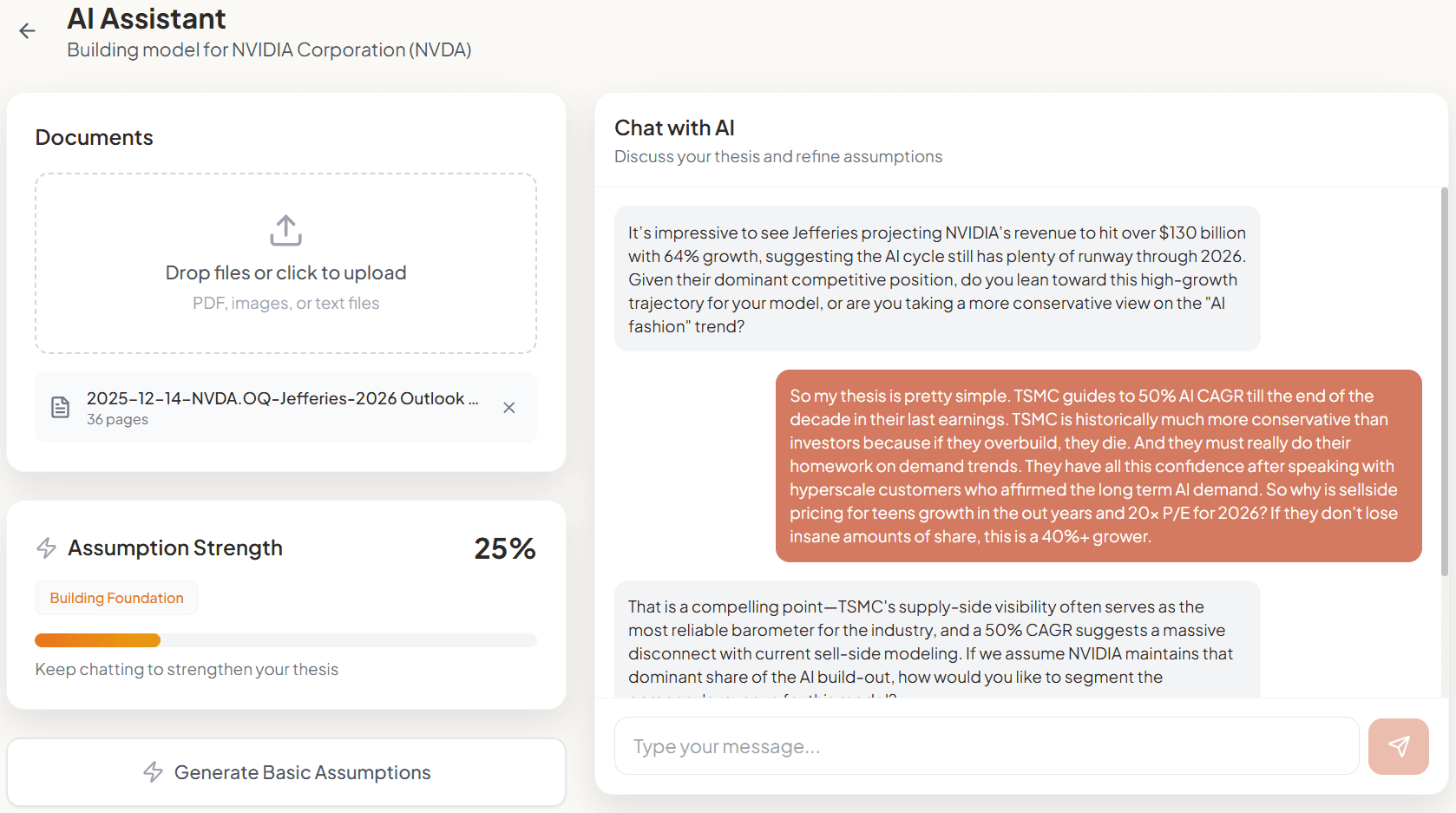
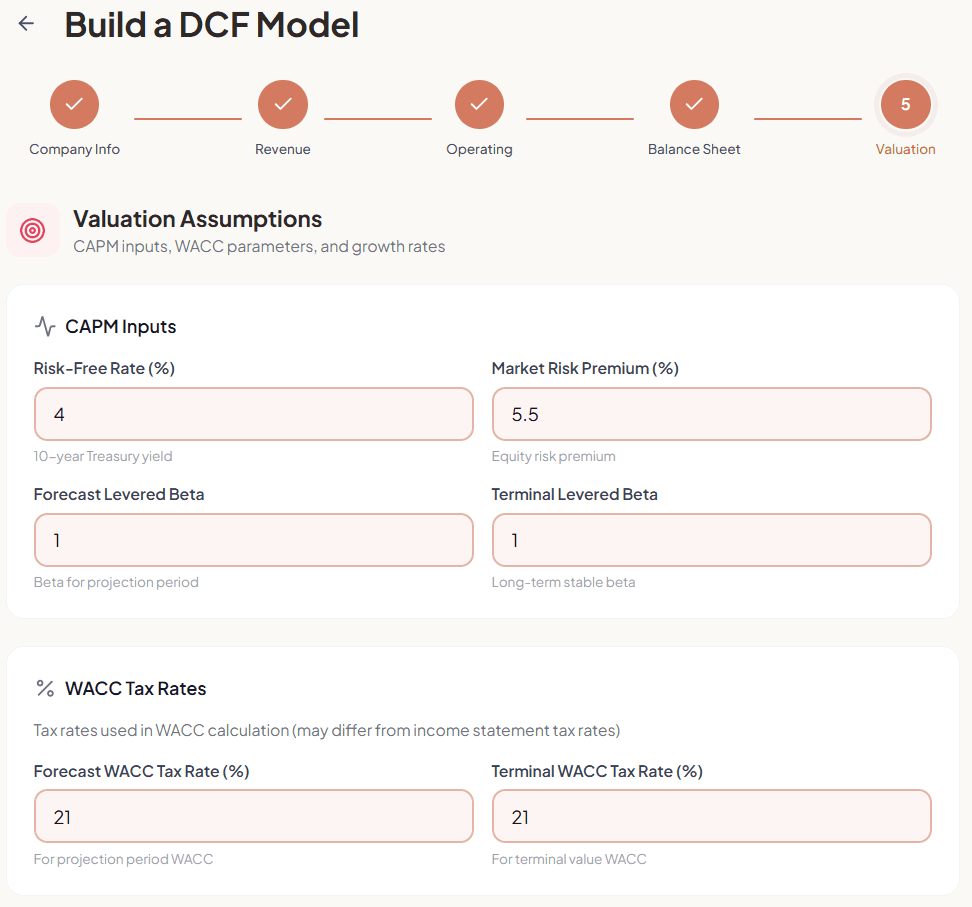
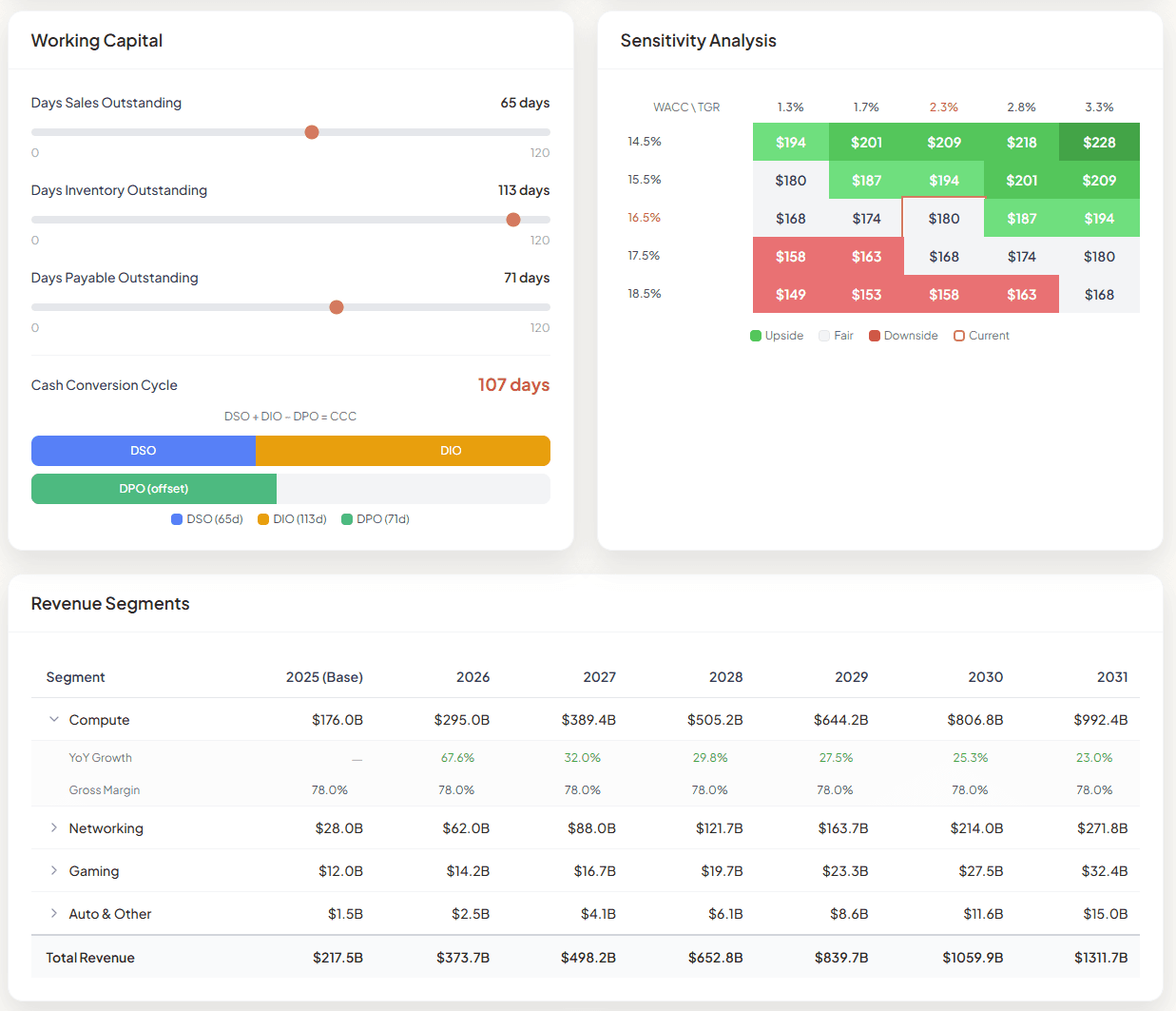
A guided wizard walks you through every assumption, with an AI assistant that pre-fills inputs from 10-Ks and analyst reports.
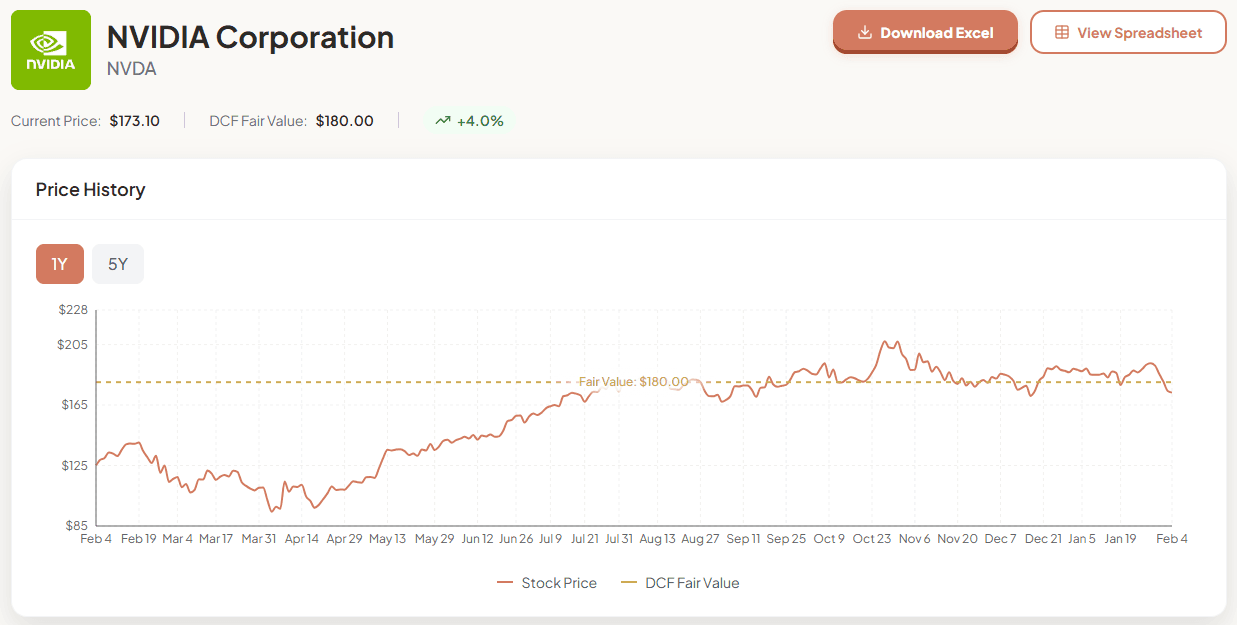
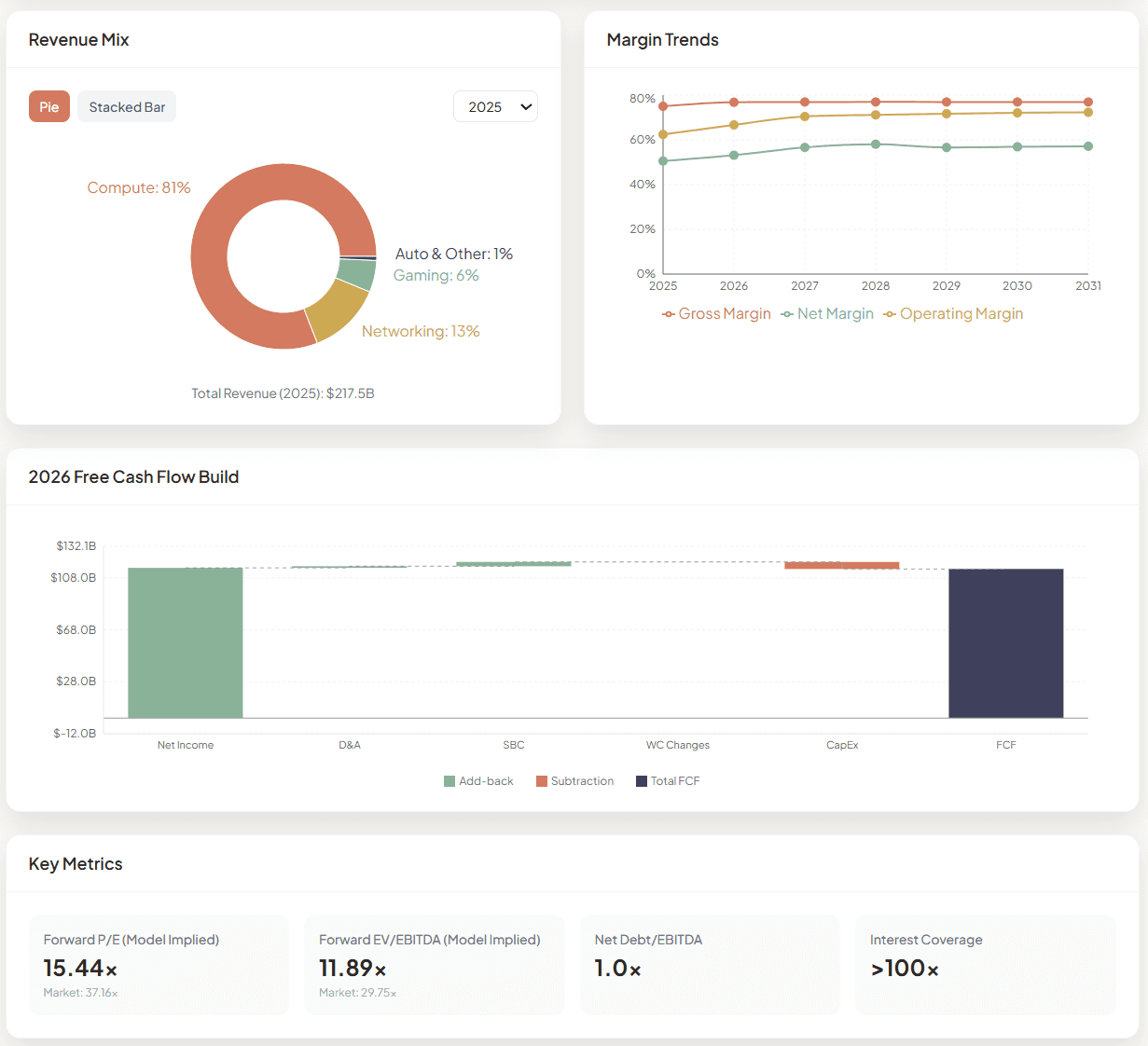
Interactive charts, margin analysis, free-cash-flow waterfalls, and sensitivity tables — all generated from your assumptions.
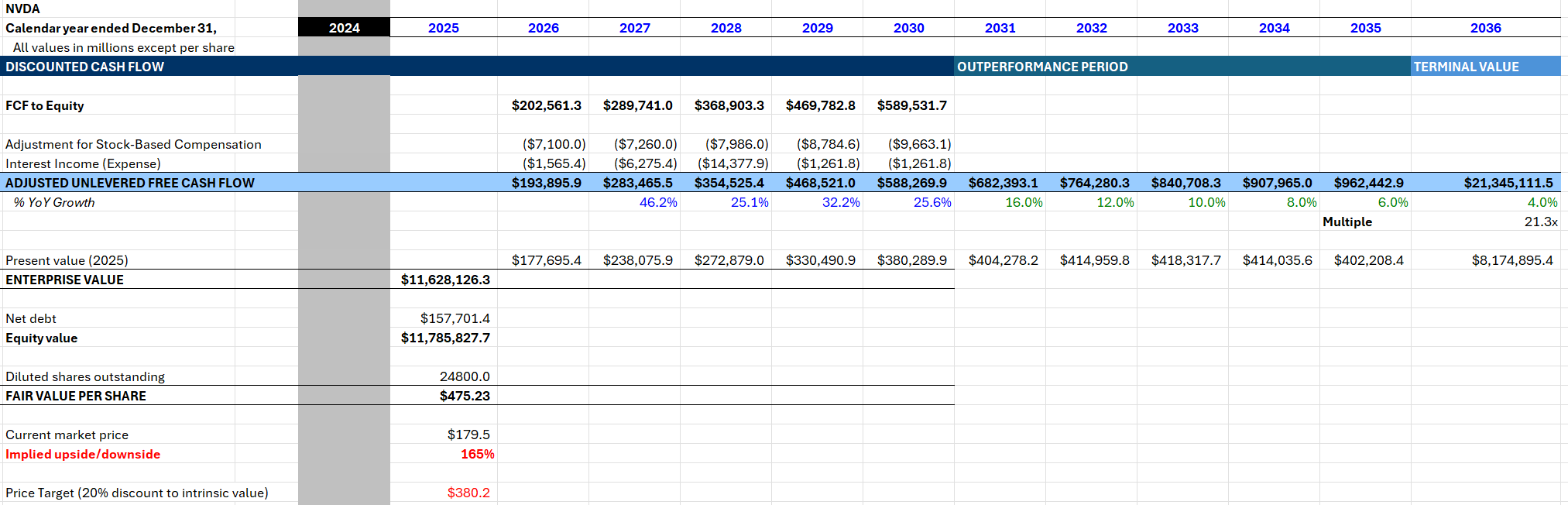
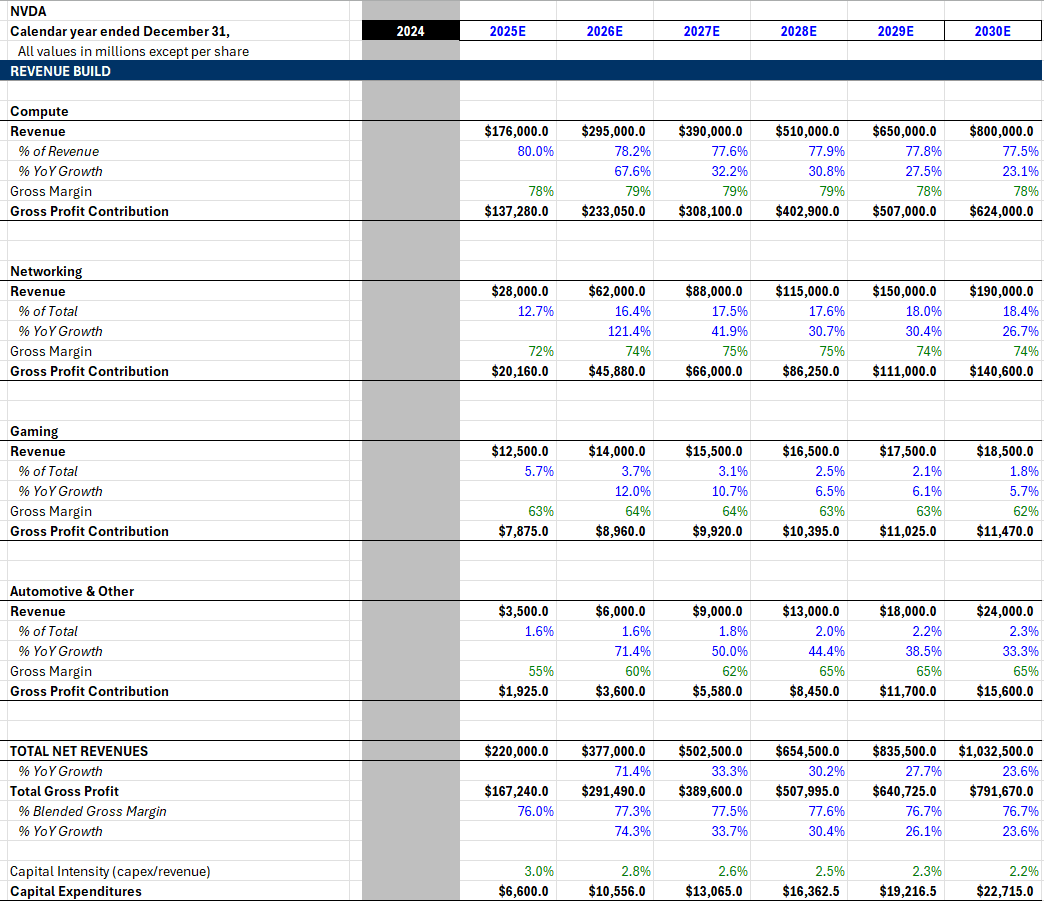
Download a professional .xlsx with 6 linked sheets — revenue build, income statement, balance sheet, cash flow, DCF valuation, and WACC.
Free tools to sharpen your analysis
Free Finance Tools
200 calculators for valuation, stock research, portfolio management, and more. No sign-up required.
Most investors buy and hope. Not you. That's why you use DCFModel to convert your research into fully functioning models in minutes, not days, with beautiful dashboards to visualize your thesis. Leverage AI to populate assumptions and balance sheet data. Generate complete 3-statement models with linked formulas. Run sensitivity analysis to see how assumptions affect fair value. Download a professional Excel file you can customize forever. Your thesis deserves more. Create your DCF model today.
A Discounted Cash Flow (DCF) model calculates what a company is worth today based on how much cash it'll generate in the future. It's like asking: "If I owned this entire company, how much would I get paid over time?"
The "discounted" part accounts for the time value of money—a dollar today is worth more than a dollar in 10 years. The model projects future cash flows, discounts them back to present value, and gives you a fair value per share.
Why it matters: It's the only valuation method that focuses on what fundamentally drives a company's worth—cold, hard cash.
P/E ratios and comparables tell you what the market thinks a company is worth. A DCF tells you what you think it's worth based on your own assumptions.
Think of it this way:
The DCF forces you to be explicit about your assumptions. No hiding behind "the market knows best."
Yes and no. You're right that the output is only as good as your inputs. But that's actually the point.
A DCF doesn't predict the future. It's a thinking machine that transforms your view of a company into a valuation. If you think revenue will grow 15% annually, the DCF shows you what that implies for fair value.
The real power is running sensitivities. What if growth is only 10%? What if margins compress? The DCF helps you understand how sensitive your valuation is to different assumptions.
Bottom line: A DCF won't tell you if a company will grow 20%. But if you believe it will grow 20%, the DCF tells you what to pay for that belief.
You get a complete, professional-grade financial model with 6 interconnected sheets:
Every cell with a formula actually has a formula—not hardcoded values. Change an assumption and watch the entire model recalculate. It's a real Excel model, not a screenshot.
Absolutely. That's the whole point.
The Excel file is yours to modify however you want. Add more revenue segments, adjust the projection period, add scenario toggles, change formatting—whatever you need. The formulas are all visible and editable.
We give you a solid foundation with proper structure and linked formulas. You build on top of it based on your specific analysis needs.
We pull base financial data (revenue, shares outstanding, etc.) from public sources when you look up a ticker. But here's the thing: the base year data is just a starting point.
The real value of a DCF is in your projections—what you think will happen over the next 5-10 years. We populate reasonable starting values, but you should always verify key figures from the company's actual filings (10-K, 10-Q) for any serious analysis.
Think of the auto-populated data as a time-saver, not gospel.
No. We're very serious about this.
DCF Model is an educational tool that helps you build valuation models. We're not financial advisors, we're not recommending any stocks, and we're definitely not responsible for your investment decisions.
The valuations you generate reflect your assumptions. They're not predictions of future stock prices. Always do your own research and consider consulting a qualified financial advisor before making investment decisions.
Ready to transform how you invest?
Build Your Model